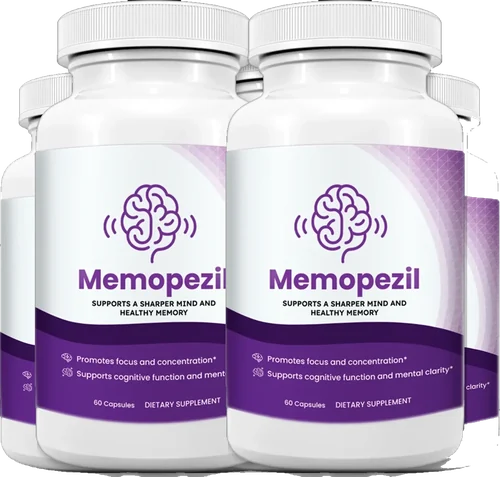
Memopezil Official Website › Choosing A Memory Supplement
Choosing A Memory SupplementChoosing a memory supplement: nine checks to run before you pay
Nine things to look at on any label in this category, in the order they matter: the panel, the doses, the plant part, the standardisation, the serving arithmetic, the claims, the seals, the window and the channel. Each one is explained, then scored against the product this website sells.
A checklist only its author's product can pass is not a checklist. This one costs the product two and a half marks out of nine, and the marks lost are printed beside the marks won.
The nine checks
1. Does the panel print an amount for every active?
A proprietary blend, or a blend name with one total weight, makes every other check on this list impossible. This is the gate: a label that fails it cannot be assessed at all, whatever else it says.
Memopezil: Pass. All five rows carry a milligram figure. No blend, no asterisked total.
2. Are those amounts close to the doses the trials used?
Find the trial dose for the two or three ingredients that carry the claim, and compare. A tenth of a trial dose is decoration; two-thirds is a real gap worth knowing about.
Memopezil: Fail. All five sit below. Bacopa at 200 mg against 300–450 mg is the closest; the amino-acid blend at 540 mg against grams is the furthest.
3. Does it name the plant part?
Root, leaf, fruit and whole plant are different materials. A trial on a root extract says nothing about a leaf preparation, and a label that names only the species has left out the deciding fact.
Memopezil: Partial. The panel names species and extract type rather than plant part for the botanicals. The vendor graphic says root powder where the panel says extract, which is the discrepancy this website prints.
4. Is the extract standardised, and to what?
A standardisation percentage tells you what the extract was produced to contain. A row with no percentage is a weight of unspecified material.
Memopezil: Partial. Rhodiola is standardised to 3% salidroside. Bacopa and ginseng carry no percentage, so their active-constituent content is not stated.
5. How many servings is a bottle, really?
Divide the count by the serving size. A sixty-count bottle at two a day is thirty days; the same bottle at one a day is sixty. Comparing bottle prices without doing this misleads by a factor of two.
Memopezil: Pass. Sixty capsules, two to a serving, thirty servings, thirty days. Stated plainly on the panel.
6. Are the claims structure-function claims?
“Supports” and “promotes” are the legal ceiling. Anything about treating, preventing, reversing or curing is a drug claim on a supplement label and it is a reason to put the bottle down.
Memopezil: Pass. Three claims, all of them supports or promotes. Nothing about decline, reversal or any diagnosis.
7. Do the seals describe what you think they describe?
Facility registration is about a building. GMP is about a process. Non-GMO is about sourcing. None of them is a statement that the formula works, and one of them is frequently unverifiable.
Memopezil: Partial. Nine of the ten are accurate statements about a factory, a sourcing decision or a policy. The doctor-formulated seal names nobody.
8. Is the refund window long enough to test the product?
For a category judged at twelve weeks, a thirty-day window is not a guarantee. Check it before paying and check whether opened bottles are included.
Memopezil: Pass. 60 days from purchase, opened bottles included, which covers most of a twelve-week run.
9. Does the channel carry the window you were promised?
A refund window travels with the seller rather than with the bottle. A marketplace listing usually carries fourteen or thirty days and no way to match a lot code.
Memopezil: Pass. Orders through this website carry the 60-day window and a lot code the order desk can check. Bought elsewhere, neither applies.
The score, and what it means
| Check | Verdict |
|---|---|
| 1. Does the panel print an amount for every active? | Pass |
| 2. Are those amounts close to the doses the trials used? | Fail |
| 3. Does it name the plant part? | Partial |
| 4. Is the extract standardised, and to what? | Partial |
| 5. How many servings is a bottle, really? | Pass |
| 6. Are the claims structure-function claims? | Pass |
| 7. Do the seals describe what you think they describe? | Partial |
| 8. Is the refund window long enough to test the product? | Pass |
| 9. Does the channel carry the window you were promised? | Pass |
Five passes, three partials, one fail. Counting a partial as a half, that is six and a half out of nine.
Six and a half is a good result in this category and it is not a great one. What earns it is transparency: a panel with five printed amounts passes the gate that a large share of this shelf fails outright, and everything else on the list can only be checked because of it.
What costs it is dosing. Every row sits below the amount its research used, and the row dosed largest has the thinnest cognition evidence of the five. That is one fail and it is the one a buyer should weigh hardest, because no amount of label honesty compensates for an amount that is too small.
The three partials are all fixable at no research cost: print the plant part, print the standardisation percentages for the bacopa and the ginseng, and either name the formulator behind the doctor seal or take the seal off. Testing and quality makes the same three requests.
Three checks that are not on the list, and why
Star ratings. Deliberately absent. Review files in this category are collected too early to measure a twelve-week ingredient, they are self-selected, nobody in them took a placebo, and expectation does real work on subjective cognitive measures. A star average is a measure of marketing and delivery, not of a formula.
Price. Also absent, because the right price depends entirely on the answers to check two. A cheap product at a tenth of every trial dose is not cheap; it is a smaller amount of nothing in particular. Do the dose comparison first and the price question mostly answers itself.
“Clinically studied ingredients”. The phrase appears on most labels in this market and it means only that somebody, somewhere, studied the ingredient at some dose. It is compatible with carrying two per cent of the studied amount. Check two exists precisely because this phrase does not survive contact with it.
How to use this checklist on a shelf
- Turn the bottle over and find the panel. If there is a proprietary blend, stop here.
- Pick the two ingredients the front of the bottle is selling and look up their trial doses. One search each.
- Divide the capsule count by the serving size and work out the real cost a day.
- Read the claims for any verb stronger than supports or promotes.
- Find the refund window and check whether it is long enough to test what you are buying, and whether opened bottles count.
Those five catch most of what goes wrong. The remaining four checks on the full list are refinements, and they matter most on botanical panels, where plant part and standardisation decide what is actually in the capsule.
Sources used for this checklist
- Pase MP, Kean J, Sarris J, et al. The cognitive-enhancing effects of Bacopa monnieri: a systematic review of randomized, controlled human clinical trials. J Altern Complement Med. 2012;18(7):647-52. PMID 22747190. https://pubmed.ncbi.nlm.nih.gov/22747190/
- Kongkeaw C, Dilokthornsakul P, Thanarangsarit P, et al. Meta-analysis of randomized controlled trials on cognitive effects of Bacopa monnieri extract. J Ethnopharmacol. 2014;151(1):528-35. PMID 24252493. https://pubmed.ncbi.nlm.nih.gov/24252493/
- Gerolymos C, Saddier E, Boyer L, et al. Cognitive and affective effects of L-Theanine: a systematic review and meta-analysis of 31 randomized trials. Mol Psychiatry. 2026. PMID 42410082. https://pubmed.ncbi.nlm.nih.gov/42410082/
- Reay JL, Kennedy DO, Scholey AB. Single doses of Panax ginseng (G115) reduce blood glucose levels and improve cognitive performance during sustained mental activity. J Psychopharmacol. 2005;19(4):357-65. PMID 15982990. https://pubmed.ncbi.nlm.nih.gov/15982990/
- Geng J, Dong J, Ni H, et al. Ginseng for cognition. Cochrane Database Syst Rev. 2010;2010(12):CD007769. PMID 21154383. https://pubmed.ncbi.nlm.nih.gov/21154383/
- Majid H, Islam SU, Kohli S, Nidhi. Efficacy of branched chain amino acid administration on cognitive function: a systematic review. Nutr Neurosci. 2026;29(5):579-594. PMID 41194744. https://pubmed.ncbi.nlm.nih.gov/41194744/
- Corwin DJ, Myers SR, Arbogast KB, et al. Head Injury Treatment With Healthy and Advanced Dietary Supplements: A Pilot Randomized Controlled Trial of the Tolerability, Safety, and Efficacy of Branched Chain Amino Acids in the Treatment of Concussion in Adolescents and Young Adults. J Neurotrauma. 2024;41(11-12):1299-1309. PMID 38468511. https://pubmed.ncbi.nlm.nih.gov/38468511/
- Thu OK, Nilsen OG, Hellum B. In vitro inhibition of cytochrome P-450 activities and quantification of constituents in a selection of commercial Rhodiola rosea products. Pharm Biol. 2016;54(12):3249-3256. PMID 27572116. https://pubmed.ncbi.nlm.nih.gov/27572116/
- Ruhsam M, Hollingsworth PM. Authentication of Eleutherococcus and Rhodiola herbal supplement products in the United Kingdom. J Pharm Biomed Anal. 2018;149:403-409. PMID 29154110. https://pubmed.ncbi.nlm.nih.gov/29154110/
- Butler M, Nelson VA, Davila H, et al. Over-the-Counter Supplement Interventions to Prevent Cognitive Decline, Mild Cognitive Impairment, and Clinical Alzheimer-Type Dementia: A Systematic Review. Ann Intern Med. 2018;168(1):52-62. PMID 29255909. https://pubmed.ncbi.nlm.nih.gov/29255909/
- Crawford C, Boyd C, Deuster PA. Dietary Supplement Ingredients for Optimizing Cognitive Performance Among Healthy Adults: A Systematic Review. J Altern Complement Med. 2021;27(11):940-958. PMID 34370563. https://pubmed.ncbi.nlm.nih.gov/34370563/
- Questions and Answers on Dietary Supplements. U.S. Food and Drug Administration. https://www.fda.gov/food/information-consumers-using-dietary-supplements/questions-and-answers-dietary-supplements
- Dietary Supplements: What You Need to Know. Office of Dietary Supplements, National Institutes of Health. https://ods.od.nih.gov/factsheets/WYNTK-Consumer/
- Using Dietary Supplements Wisely. National Center for Complementary and Integrative Health, National Institutes of Health. https://www.nccih.nih.gov/health/using-dietary-supplements-wisely
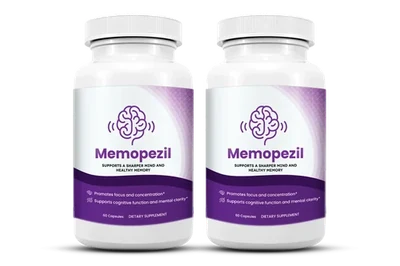
Order Memopezil on the official website
Six and a half out of nine, with the marks lost printed above rather than left out.
Two bottles $158 · six bottles $294 · 60-day money-back guarantee
Order Memopezil On The Official WebsiteTwo capsules a morning · 60 per bottle · lot MEM-26/ME-3917