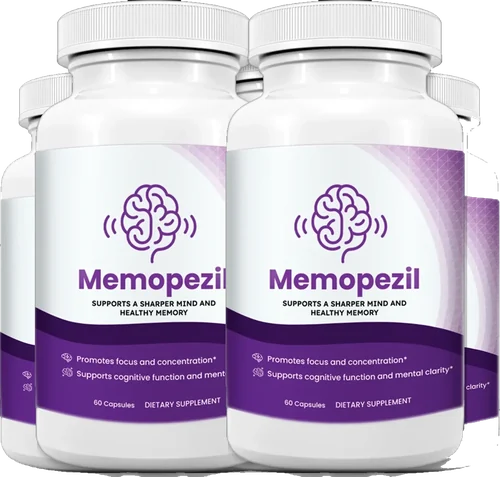
Memopezil Official Website › Ingredients
IngredientsMemopezil Ingredients: every row on the panel, with the dose its research used
Five actives, each with a milligram figure printed beside it: 540 mg of branched-chain amino acids, 200 mg of bacopa, 100 mg of rhodiola at 3% salidroside, 100 mg of L-theanine and 90 mg of Panax ginseng. Three processing aids make up the rest. Below, each row is set against the amount the published trials used.
There is no proprietary blend on this bottle, which is why this page can be written at all. What follows is each row in panel order, what it has been studied for, and how the printed amount compares with the studied one.
The five actives in Memopezil, in panel order
Amounts are per two-capsule serving, which is one day at the label dose.
Branched Chain Amino Acids 2:1:1
L-leucine, L-isoleucine, L-valine540 mgThe largest row on the panel by a wide margin. Two parts leucine to one part isoleucine to one part valine is the standard sports-nutrition ratio, and it is here because of a serotonin argument rather than a memory one: branched-chain amino acids compete with tryptophan for the same transporter into the brain, so raising them is proposed to blunt the serotonin rise behind central fatigue. the central fatigue hypothesis set that hypothesis out in 1995 and it has been argued over in exercise physiology ever since.
The cognition file is thin and it is mixed. the 2026 systematic review of BCAAs and cognition found eight studies in 353 participants: five reported no significant change, three reported improvement, and the review notes that some studies suggest detrimental effects. The strongest single result is the brain-injury rehabilitation trial, where supplementation improved disability scores in people recovering from severe traumatic brain injury, which is a different population and a different question. the BCAA concussion trial is the trial that escalated the dose: 30 g, 45 g and 54 g a day for 21 days.
Against 30 grams, 540 milligrams is under two per cent. An ordinary chicken breast supplies several grams of the same three amino acids, which is the context a reader deserves before deciding what this row is doing on a memory label. the 2023 review of amino-acid upper intake levels reviews where the safe ceiling for individual amino acids sits, and 540 mg is nowhere near any of them, so this is a question about effect rather than about safety.
Bacopa Monnieri Extract
Bacopa monnieri, whole plant200 mgThe row that earns this product its category. Bacopa is the botanical with the largest and most consistent human file for memory specifically, and it is also the slowest thing on the panel. Pase's systematic review reviewed the randomised trials and put the finding precisely: the effect appears in memory free recall, with little evidence of enhancement in other cognitive domains, at doses of 300 to 450 mg of extract a day.
The three trials behind that conclusion all ran twelve weeks at 300 mg a day. the first chronic Bacopa trial measured the first chronic effects in healthy adults. the 2008 trial in older adults repeated it in older adults with anxiety and depression measures alongside. Morgan and Stevens' memory trial asked the question directly in older people and answered it in the affirmative for recall. the 2014 meta-analysis pooled them, and Brimson's analysis of the clinical data went back over the available clinical data more sceptically. The newest entry, the 2026 network meta-analysis, compares bacopa against ginkgo across the whole literature.
Two hundred milligrams is two-thirds of the amount every one of those trials used. That is a real gap and it is also the smallest gap on this panel. Nobody should expect a trial result from two-thirds of a trial dose, and nobody should pretend the difference between 200 and 300 is the difference between something and nothing.
Rhodiola Rosea Extract
Rhodiola rosea, root and rhizome, 3% salidroside100 mgAn adaptogen, researched against fatigue and mental work capacity rather than against memory. the night-duty crossover study is the trial most often cited: 56 healthy physicians took one standardised SHR-5 tablet a day for two weeks while working night duty, and their fatigue index improved significantly over the first fortnight. the two-dose cadet trial gave cadets two or three capsules as a single dose against a background of fatigue and found a pronounced anti-fatigue effect at both, with no significant difference between the two amounts.
the 2012 systematic review of Rhodiola is the honest summary of the whole field: the research is contradictory, some of it suggests the herb helps with physical and mental fatigue, and the methodological quality across the literature is uneven.
Two details about this particular row matter more than the milligram figure. The first is standardisation. Rhodiola extracts in the trials were generally standardised to rosavins as well as salidroside; this label prints salidroside only, at three per cent, which describes a different material from the ones that were tested. The second is supply-chain variability. the analysis of commercial Rhodiola products measured constituent content across six commercial Rhodiola preparations and found wide variation between them, including one product containing none of the rosavin markers at all, and the UK authentication survey found species substitution in UK retail products. Neither finding is about this bottle. Both are reasons a certificate of analysis would be worth more here than on most panels.
L-Theanine
gamma-glutamylethylamide, from green tea100 mgThe one row on this panel with a fast, repeatable, well-pooled finding. the 2026 meta-analysis of 31 theanine trials brought together 31 randomised trials in 1,168 people and reported that a single 200 mg dose taken 30 to 60 minutes before testing improved choice reaction time, with a standardised mean difference of 0.51. That is attention measured within the hour, not memory built over months.
The same meta-analysis was more cautious about everything else: the reduction in acute stress was modest and driven partly by studies at high risk of bias, there was no significant effect on fatigue, and no serious adverse events were reported anywhere in the pooled data. the four-week theanine trial ran 200 mg a day for four weeks against stress-related symptoms and cognitive function. the multitasking stressor study gave a theanine drink before a multitasking stressor and found the subjective stress response reduced, while cognitive performance itself did not change. the 2020 review of theanine and stress is the narrower review of stress and anxiety, and the tea and theanine meta-analysis pools the tea literature, where theanine alongside caffeine performs better than theanine alone.
This panel carries 100 mg and no caffeine. That is half the dose behind the reaction-time finding, without the companion the tea literature suggests helps. It is also the reason the product does not interfere with sleep, which is a trade a fair number of buyers would make deliberately.
Panax Ginseng Extract
Panax ginseng, root90 mgThe smallest row, and the one with the most contradictory file. the single-dose G115 study gave healthy volunteers 200 mg or 400 mg of the G115 extract and found improved cognitive performance during sustained mental activity, alongside a fall in blood glucose. the eight-day working-memory trial repeated it over eight days at the same two doses and found effects on working memory and self-rated calmness that varied by dose and by hour.
Against that sits the Cochrane review of ginseng for cognition, which concluded there is a lack of convincing evidence for a cognitive enhancing effect of Panax ginseng in healthy participants, and no high-quality evidence about its efficacy in dementia. the 2024 ginseng meta-analysis pooled more recent work and found a small overall effect that was larger at high doses. The clinical trials in dementia populations, such as the Korean red ginseng dementia trial, used Korean red ginseng at 4.5 and 9 grams a day, which is fifty to a hundred times what is on this panel.
Ninety milligrams is well under half the smallest dose in the positive healthy-volunteer trials. It is also the row with the one documented interaction worth raising with a prescriber: the ginseng and warfarin trial found American ginseng reduced warfarin's effect in healthy patients, and the stroke-clinic warfarin study examined the same combination in stroke patients.
What else is in a Memopezil capsule
| Other ingredient | What it does |
|---|---|
| Microcrystalline cellulose | A bulking agent. Plant-derived, inert, and present in a large share of capsules and tablets on any shelf. |
| Hydroxypropyl methylcellulose | The capsule shell itself. A plant cellulose, which is why the vegetarian seal on this pack is accurate. |
| Magnesium stearate | A flow agent. It stops powder sticking to the tooling during a run and is used in milligram quantities. |
The label prints “Contains No Allergens” beneath this line. There is no colouring, no sweetener and no flavouring, none of which a capsule needs.
Three processing aids is a short list for a capsule, and a short list is a small point in a label's favour. It means the sixty capsules in the bottle are mostly the five actives and the shell around them.
What is not in Memopezil
- No ginkgo biloba. The other botanical with a large human memory file is not on this panel, although the marketing photograph stages the bottle among ginkgo leaves.
- No honey. The vendor's own ingredient graphic names Pure Honey. The panel's fifth row is the branched-chain amino acid blend.
- No caffeine and no stimulant. Nothing here raises heart rate or shortens sleep, which is a deliberate and useful property.
- No phosphatidylserine, citicoline, huperzine or lion's mane. The four ingredients a shopper comparing cognition labels will meet most often elsewhere are all absent.
- No vitamin or mineral row. A B-complex is the commonest filler in this category and this panel has none, which keeps the capsule weight with the five actives.
The blueberries and the mushroom in the photograph are in the same position as the ginkgo: they are set dressing rather than contents. Shopping by picture is a reliable way to buy something other than what you meant to, and the panel is the only surface that settles it.
Why the Memopezil artwork and the Memopezil panel name different things
The vendor's INSIDE MEMOPEZIL graphic lists five ingredients: Pure Honey, Bacopa Monnieri Extract, Rhodiola Rosea Root Powder, L-Theanine and Panax Ginseng Extract. The Supplement Facts panel also lists five, and two of them are different.
Honey does not appear on the panel at all. In its place is the branched-chain amino acid blend at 540 mg. And where the graphic says root powder, the panel says extract standardised to 3% salidroside. A dried root powder and a standardised extract are different materials: the extract concentrates particular constituents and discards most of the plant mass, so the same weight of each contains very different amounts of the compounds the research is about.
Which one is right is not really a question. The Supplement Facts panel is the regulated surface, it is printed on the bottle that arrives, and it is what this whole website treats as the product. Marketing artwork is produced separately and, on this pack, was not brought back into line. It is worth one paragraph, once, because a buyer who chose this bottle for the honey has a fair grievance and deserves to know before the box is open.
What a certificate of analysis would add to the Memopezil panel
A printed amount is a manufacturer's declaration. A certificate of analysis is a laboratory's measurement of a specific run, and for a panel like this one it would answer three questions the label cannot.
First, identity: is the rhodiola actually Rhodiola rosea? The UK retail survey cited above found species substitution in commercial products, and rhodiola is one of the botanicals where that happens. Second, marker content: does the extract genuinely carry three per cent salidroside? The analysis of six commercial preparations found that constituent content varied widely between products carrying similar label claims. Third, contaminants: heavy metals and microbial counts, which are the routine part of any identity and purity screen.
This desk has a certificate reference, MEM-3917-26-ME, against lot MEM-26/ME-3917. It does not have the document itself, and a reference number is not a result. The batch verification page explains exactly what the order desk can and cannot confirm about a bottle, and this website will print a certificate the day one is supplied.
The research behind each Memopezil ingredient
- Majid H, Islam SU, Kohli S, Nidhi. Efficacy of branched chain amino acid administration on cognitive function: a systematic review. Nutr Neurosci. 2026;29(5):579-594. PMID 41194744. https://pubmed.ncbi.nlm.nih.gov/41194744/
- Aquilani R, Iadarola P, Contardi A, et al. Branched-chain amino acids enhance the cognitive recovery of patients with severe traumatic brain injury. Arch Phys Med Rehabil. 2005;86(9):1729-35. PMID 16181934. https://pubmed.ncbi.nlm.nih.gov/16181934/
- Corwin DJ, Myers SR, Arbogast KB, et al. Head Injury Treatment With Healthy and Advanced Dietary Supplements: A Pilot Randomized Controlled Trial of the Tolerability, Safety, and Efficacy of Branched Chain Amino Acids in the Treatment of Concussion in Adolescents and Young Adults. J Neurotrauma. 2024;41(11-12):1299-1309. PMID 38468511. https://pubmed.ncbi.nlm.nih.gov/38468511/
- Davis JM. Carbohydrates, branched-chain amino acids, and endurance: the central fatigue hypothesis. Int J Sport Nutr. 1995;5 Suppl:S29-38. PMID 7550256. https://pubmed.ncbi.nlm.nih.gov/7550256/
- Elango R. Tolerable Upper Intake Level for Individual Amino Acids in Humans: A Narrative Review of Recent Clinical Studies. Adv Nutr. 2023;14(4):885-894. PMID 37062432. https://pubmed.ncbi.nlm.nih.gov/37062432/
- Stough C, Lloyd J, Clarke J, et al. The chronic effects of an extract of Bacopa monniera (Brahmi) on cognitive function in healthy human subjects. Psychopharmacology (Berl). 2001;156(4):481-4. PMID 11498727. https://pubmed.ncbi.nlm.nih.gov/11498727/
- Calabrese C, Gregory WL, Leo M, et al. Effects of a standardized Bacopa monnieri extract on cognitive performance, anxiety, and depression in the elderly: a randomized, double-blind, placebo-controlled trial. J Altern Complement Med. 2008;14(6):707-13. PMID 18611150. https://pubmed.ncbi.nlm.nih.gov/18611150/
- Morgan A, Stevens J. Does Bacopa monnieri improve memory performance in older persons? Results of a randomized, placebo-controlled, double-blind trial. J Altern Complement Med. 2010;16(7):753-9. PMID 20590480. https://pubmed.ncbi.nlm.nih.gov/20590480/
- Pase MP, Kean J, Sarris J, et al. The cognitive-enhancing effects of Bacopa monnieri: a systematic review of randomized, controlled human clinical trials. J Altern Complement Med. 2012;18(7):647-52. PMID 22747190. https://pubmed.ncbi.nlm.nih.gov/22747190/
- Kongkeaw C, Dilokthornsakul P, Thanarangsarit P, et al. Meta-analysis of randomized controlled trials on cognitive effects of Bacopa monnieri extract. J Ethnopharmacol. 2014;151(1):528-35. PMID 24252493. https://pubmed.ncbi.nlm.nih.gov/24252493/
- Brimson JM, Brimson S, Prasanth MI, et al. The effectiveness of Bacopa monnieri (Linn.) Wettst. as a nootropic, neuroprotective, or antidepressant supplement: analysis of the available clinical data. Sci Rep. 2021;11(1):596. PMID 33436817. https://pubmed.ncbi.nlm.nih.gov/33436817/
- Tiemtad P, Ingkaninan K, Temkitthawon P, et al. Comparative effects of Bacopa monnieri and Ginkgo biloba on cognitive functions: A systematic review and network meta-analysis. Phytomedicine. 2026;153:157915. PMID 41678913. https://pubmed.ncbi.nlm.nih.gov/41678913/
- Darbinyan V, Kteyan A, Panossian A, et al. Rhodiola rosea in stress induced fatigue -- a double blind cross-over study of a standardized extract SHR-5 with a repeated low-dose regimen on the mental performance of healthy physicians during night duty. Phytomedicine. 2000;7(5):365-71. PMID 11081987. https://pubmed.ncbi.nlm.nih.gov/11081987/
- Shevtsov VA, Zholus BI, Shervarly VI, et al. A randomized trial of two different doses of a SHR-5 Rhodiola rosea extract versus placebo and control of capacity for mental work. Phytomedicine. 2003;10(2-3):95-105. PMID 12725561. https://pubmed.ncbi.nlm.nih.gov/12725561/
- Ishaque S, Shamseer L, Bukutu C, et al. Rhodiola rosea for physical and mental fatigue: a systematic review. BMC Complement Altern Med. 2012;12:70. PMID 22643043. https://pubmed.ncbi.nlm.nih.gov/22643043/
- Thu OK, Nilsen OG, Hellum B. In vitro inhibition of cytochrome P-450 activities and quantification of constituents in a selection of commercial Rhodiola rosea products. Pharm Biol. 2016;54(12):3249-3256. PMID 27572116. https://pubmed.ncbi.nlm.nih.gov/27572116/
- Ruhsam M, Hollingsworth PM. Authentication of Eleutherococcus and Rhodiola herbal supplement products in the United Kingdom. J Pharm Biomed Anal. 2018;149:403-409. PMID 29154110. https://pubmed.ncbi.nlm.nih.gov/29154110/
- Gerolymos C, Saddier E, Boyer L, et al. Cognitive and affective effects of L-Theanine: a systematic review and meta-analysis of 31 randomized trials. Mol Psychiatry. 2026. PMID 42410082. https://pubmed.ncbi.nlm.nih.gov/42410082/
- Hidese S, Ogawa S, Ota M, et al. Effects of L-Theanine Administration on Stress-Related Symptoms and Cognitive Functions in Healthy Adults: A Randomized Controlled Trial. Nutrients. 2019;11(10). PMID 31623400. https://pubmed.ncbi.nlm.nih.gov/31623400/
- White DJ, de Klerk S, Woods W, et al. Anti-Stress, Behavioural and Magnetoencephalography Effects of an L-Theanine-Based Nutrient Drink: A Randomised, Double-Blind, Placebo-Controlled, Crossover Trial. Nutrients. 2016;8(1). PMID 26797633. https://pubmed.ncbi.nlm.nih.gov/26797633/
- Williams JL, Everett JM, D'Cunha NM, et al. The Effects of Green Tea Amino Acid L-Theanine Consumption on the Ability to Manage Stress and Anxiety Levels: a Systematic Review. Plant Foods Hum Nutr. 2020;75(1):12-23. PMID 31758301. https://pubmed.ncbi.nlm.nih.gov/31758301/
- Payne ER, Aceves-Martins M, Dubost J, et al. Effects of Tea (Camellia sinensis) or its Bioactive Compounds l-Theanine or l-Theanine plus Caffeine on Cognition, Sleep, and Mood in Healthy Participants: A Systematic Review and Meta-Analysis of Randomized Controlled Trials. Nutr Rev. 2025;83(10):1873-1891. PMID 40314930. https://pubmed.ncbi.nlm.nih.gov/40314930/
- Reay JL, Kennedy DO, Scholey AB. Single doses of Panax ginseng (G115) reduce blood glucose levels and improve cognitive performance during sustained mental activity. J Psychopharmacol. 2005;19(4):357-65. PMID 15982990. https://pubmed.ncbi.nlm.nih.gov/15982990/
- Reay JL, Scholey AB, Kennedy DO. Panax ginseng (G115) improves aspects of working memory performance and subjective ratings of calmness in healthy young adults. Hum Psychopharmacol. 2010;25(6):462-71. PMID 20737519. https://pubmed.ncbi.nlm.nih.gov/20737519/
- Geng J, Dong J, Ni H, et al. Ginseng for cognition. Cochrane Database Syst Rev. 2010;2010(12):CD007769. PMID 21154383. https://pubmed.ncbi.nlm.nih.gov/21154383/
- Zeng M, Zhang K, Yang J, et al. Effects of Ginseng on Cognitive Function: A Systematic Review and Meta-Analysis. Phytother Res. 2024;38(12):6023-6034. PMID 39474788. https://pubmed.ncbi.nlm.nih.gov/39474788/
- Heo JH, Lee ST, Chu K, et al. An open-label trial of Korean red ginseng as an adjuvant treatment for cognitive impairment in patients with Alzheimer's disease. Eur J Neurol. 2008;15(8):865-8. PMID 18684311. https://pubmed.ncbi.nlm.nih.gov/18684311/
- Yuan CS, Wei G, Dey L, et al. Brief communication: American ginseng reduces warfarin's effect in healthy patients: a randomized, controlled trial. Ann Intern Med. 2004;141(1):23-7. PMID 15238367. https://pubmed.ncbi.nlm.nih.gov/15238367/
- Lee SH, Ahn YM, Ahn SY, et al. Interaction between warfarin and Panax ginseng in ischemic stroke patients. J Altern Complement Med. 2008;14(6):715-21. PMID 18637764. https://pubmed.ncbi.nlm.nih.gov/18637764/
Order Memopezil on the official website
Five actives, five printed amounts, and the three-bottle pack covers the ninety days the bacopa research measured over.
Two bottles $158 · six bottles $294 · 60-day money-back guarantee
Order Memopezil On The Official WebsiteTwo capsules a morning · 60 per bottle · lot MEM-26/ME-3917