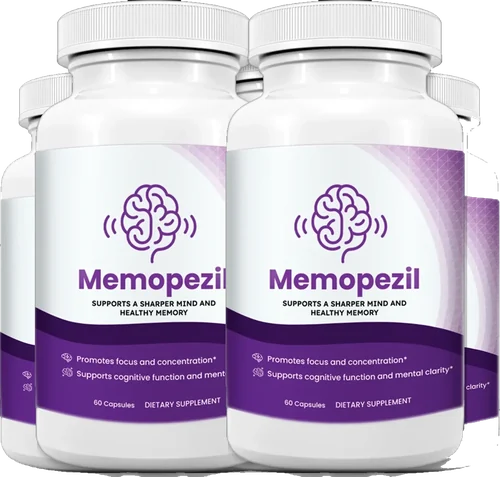
Memopezil Official Website › Guides
GuidesMemopezil guides: how to read a memory supplement before you buy one
Two long reads that are not about this product. The first covers what the cognition category actually contains and what its evidence looks like. The second is a nine-point checklist for reading any label in it, applied at the end to this one, with the score it earns rather than the score it would like.
Written to be useful to somebody who buys something else. A checklist that only its author's product could pass is not a checklist.
Why these two guides exist
Most of what a buyer needs in this category is not about any particular bottle. It is about how to read a Supplement Facts panel, what the trial doses behind the recurring ingredients actually were, why the timescales are what they are, and which of the seals on a pack describe something checkable.
Putting that material on a product page turns the product page into a lecture. Leaving it out altogether means every product page has to keep re-explaining the same background in half-sentences. So it lives here, in two long pieces, and the product pages link to it and get on with describing the bottle.
Neither guide mentions this product until the end, and the one that does mention it scores it and publishes the marks it loses. That is the point of the exercise: a checklist worth using is one that can fail the thing its author is selling.
The two guides
A guide to memory supplements
What the category contains, which ingredients have real human trials behind them, what the trials actually measured, and why almost every product in it is judged on a timescale of months. Roughly a fifteen-minute read.
Choosing a memory supplement
Nine checks to run on any label before paying: the panel, the doses, the plant part, the standardisation, the serving arithmetic, the claims, the seals, the window and the channel. Scored against this product at the end.
Why Memopezil publishes guides that do not sell it
Because a reader who can read a label is a better customer than one who cannot, and because a site whose only argument is its own product has no argument at all.
The nine-point checklist in the second guide scores this product at six and a half out of nine. That is a reasonable result and it is not a perfect one, and publishing the marks it loses is the only thing that makes the marks it wins worth anything.
Both guides are also the place where the category-level facts live, which keeps them out of the product pages. The claims ceiling, the timescale, the difference between a plant part and an extract and the difference between process testing and efficacy testing are all category properties rather than facts about this bottle.
What the memory supplement guide covers
It opens with what the category is actually trying to do, which is narrower than the advertising suggests. The trials behind these ingredients measured memory free recall, choice reaction time, sustained attention during demanding work and composite fatigue indices. None of them measured intelligence and none of them measured dementia risk.
The centre of the guide is a table of the six ingredients that recur across this shelf, what their human trials measured, and the dose each trial used. Those doses are the most useful column on any page of this website, because they are what turns a label into something you can judge. Bacopa at 300–450 mg a day over twelve weeks. Theanine at 200 mg as a single dose. Ginseng at 200 and 400 mg of a named extract. Branched-chain amino acids in grams.
From there it explains why everything in the category is slow, what separates a plant part from an extract from a standardised extract, and the six things that move everyday memory harder than any capsule does. It closes with four tells worth recognising in how this market is sold: the permanent struck price, the proprietary blend, the twelve-ingredient serving and the unnamed formulator.
What the choosing checklist covers
Nine checks, in the order they matter, each explained and then scored against this product.
The first is the gate: does the panel print an amount for every active? A label that fails it cannot be assessed at all, and a large share of this shelf fails it. The second is the one that costs most products their score: are those amounts close to what the trials used?
Then seven refinements. Plant part. Standardisation. The serving arithmetic that decides whether a sixty-count bottle is a month or two months. Whether the claims stay inside the structure-function ceiling. What the seals actually describe. Whether the refund window is long enough to test a twelve-week ingredient. And whether the channel you are buying through carries that window at all.
This product scores six and a half out of nine: five passes, three partials and one fail. The fail is dosing, and it is the one a buyer should weigh hardest. Read the checklist.
Who each guide is for
Somebody comparing three bottles
Start with the checklist. Five minutes with a panel in your hand is worth more than an hour of reading reviews, and the first two checks eliminate most of a shelf on their own.
Somebody who wants to understand the category
Start with the guide. It is the longer read and it explains why the timescales, the doses and the claims in this market look the way they do.
Somebody who has already bought something
The checklist, applied to the bottle you own. It is more useful before a purchase and it is still useful after one, particularly the serving arithmetic and the refund window.
Somebody deciding whether to buy anything at all
The guide's section on what moves memory more than any supplement. It is the honest answer to that question and it is not the answer a retailer is supposed to print.
What the Memopezil pages cover instead
- Ingredients: the five panel rows, each with the dose its trials used.
- Supplement facts: the panel photographed and transcribed.
- How it works: three proposed routes on three timescales.
- Results timeline: week by week, with nothing promised.
- Pricing: three packs, cost a day, and which one matches the evidence window.
- The blog: five longer pieces on the questions this particular panel raises.
The five questions the blog takes further
Beside these two guides sit five longer pieces, each one on a question this particular panel raises rather than on the category in general.
The first is the dose arithmetic on the panel's largest row, which is the single most interesting thing about this label. The second is why twelve weeks keeps appearing in the bacopa literature and what that does to reviews, refunds and expectations. The third is the difference between a root powder and a standardised extract, which is where the vendor's artwork and the bottle disagree.
The fourth is about the brand name and its resemblance to a prescription medicine, which is the thing about this product most worth being explicit about. The fifth is what a supplement label is and is not required to tell you, which is the background to every “this is not stated” sentence on this website.
The blog index lists all five with what each one covers.
Who writes these guides
The standing sources behind both long reads. Every PubMed record was verified against the database before it was written, and the four institutional pages are the ones a reader can open without a subscription.
- Butler M, Nelson VA, Davila H, et al. Over-the-Counter Supplement Interventions to Prevent Cognitive Decline, Mild Cognitive Impairment, and Clinical Alzheimer-Type Dementia: A Systematic Review. Ann Intern Med. 2018;168(1):52-62. PMID 29255909. https://pubmed.ncbi.nlm.nih.gov/29255909/
- Crawford C, Boyd C, Deuster PA. Dietary Supplement Ingredients for Optimizing Cognitive Performance Among Healthy Adults: A Systematic Review. J Altern Complement Med. 2021;27(11):940-958. PMID 34370563. https://pubmed.ncbi.nlm.nih.gov/34370563/
- Cicero AFG, Fogacci F, Banach M. Botanicals and phytochemicals active on cognitive decline: The clinical evidence. Pharmacol Res. 2018;130:204-212. PMID 29289576. https://pubmed.ncbi.nlm.nih.gov/29289576/
- Memory, Forgetfulness, and Aging: What's Normal and What's Not? National Institute on Aging, National Institutes of Health. https://www.nia.nih.gov/health/memory-loss-and-forgetfulness/memory-forgetfulness-and-aging-whats-normal-and-whats-not
- Using Dietary Supplements Wisely. National Center for Complementary and Integrative Health, National Institutes of Health. https://www.nccih.nih.gov/health/using-dietary-supplements-wisely
- Dietary Supplements: What You Need to Know. Office of Dietary Supplements, National Institutes of Health. https://ods.od.nih.gov/factsheets/WYNTK-Consumer/
- Questions and Answers on Dietary Supplements. U.S. Food and Drug Administration. https://www.fda.gov/food/information-consumers-using-dietary-supplements/questions-and-answers-dietary-supplements
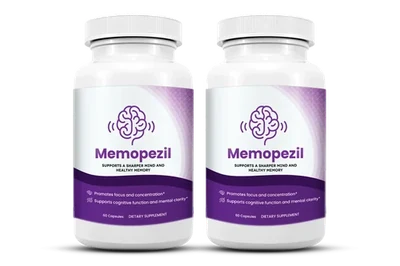
Order Memopezil on the official website
Read the checklist first if you like. It is written to be used on any label, including this one.
Two bottles $158 · six bottles $294 · 60-day money-back guarantee
Order Memopezil On The Official WebsiteTwo capsules a morning · 60 per bottle · lot MEM-26/ME-3917