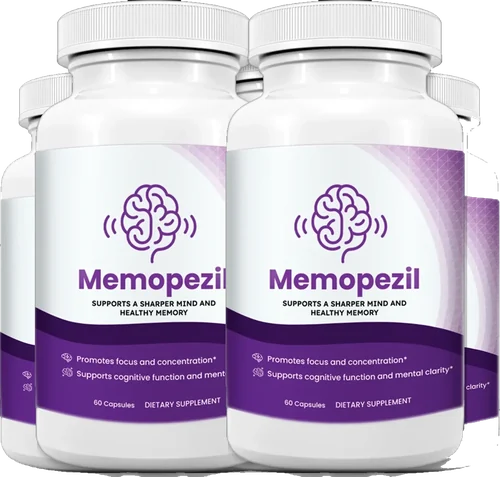
Memopezil Official Website › How It Works
How It WorksHow does Memopezil work? The three routes on this panel
Three different kinds of ingredient act by three proposed routes on three timescales. Theanine affects attention within an hour. Rhodiola and ginseng are studied against fatigue and mental work capacity over weeks. Bacopa is the memory ingredient and the slowest, measured at twelve weeks in every trial behind it.
No mechanism here is a drug mechanism, and none of them is fast except one. Knowing which is which is the difference between a fair test of this capsule and an expensive fortnight.
Route one: the amino acid that works on the day you take Memopezil
L-theanine is a non-protein amino acid found almost exclusively in tea. It crosses the blood-brain barrier, and the effect that survives pooling across trials is on attention rather than on memory. the 2026 meta-analysis of 31 theanine trials, covering 31 randomised trials, reported that a single 200 mg dose taken 30 to 60 minutes before testing improved choice reaction time.
Choice reaction time is how quickly and accurately a person picks the right response among several. It is a decent proxy for the kind of attention that makes a morning feel sharp, and it is measured on the day. Nothing about it implies anything about recall a month later.
This panel carries 100 mg, half the pooled dose, and no caffeine. The tea literature summarised in the tea and theanine meta-analysis consistently finds theanine plus caffeine outperforms theanine alone on cognition and mood outcomes, so the absence of caffeine here is a real subtraction as well as the reason the capsule leaves sleep alone.
Route two: what the two adaptogens in Memopezil are actually studied for
Rhodiola and Panax ginseng are both sold as adaptogens, a word with more marketing history than regulatory meaning. What the trials measured is narrower and more interesting than the word suggests.
The rhodiola work is about fatigue. the night-duty crossover study tested doctors working night duty and measured a composite fatigue index built from associative thinking, short-term memory, calculation and concentration speed. the two-dose cadet trial tested cadets under fatigue and stress with a single dose. Both found improvement; neither was a memory trial, and the 2012 systematic review of Rhodiola describes the overall literature as contradictory.
The ginseng work splits by population. In healthy volunteers, the two Reay trials found effects during sustained mental effort at 200 and 400 mg of a specific extract, alongside a measurable fall in blood glucose, which is itself one of the proposed routes. In dementia populations the doses jump to grams and the designs are open-label. The Cochrane review sits across both and finds the healthy-volunteer evidence unconvincing.
The honest summary of route two: these two rows are more likely to change how a demanding afternoon feels than to change what you remember from it.
Route three: the slow one, and the reason Memopezil is a memory product
Bacopa monnieri is the ingredient that puts this product in the memory category rather than the energy one, and its mechanism is the only one on the panel that is proposed to change something structural rather than something momentary. The candidate routes in the literature are cholinergic activity, antioxidant effects in the hippocampus, and dendritic arborisation in animal work.
What matters more than the proposed route is the timescale the human trials imposed. Pase's systematic review found the effect in memory free recall across trials of 300 to 450 mg a day, and every one of them measured at twelve weeks. the twelve-week attention study ran exactly that length in healthy older volunteers and reported changes in attention and working memory alongside cholinergic measures.
Twelve weeks is not a marketing convention. It is how long the researchers thought they needed before there was anything to measure. A buyer who takes this capsule for three weeks and concludes nothing happened has run a test the literature would not have bothered to run.
The row on the Memopezil panel whose route is least established
Branched-chain amino acids are 540 mg of this panel, more than everything else on it combined, and the argument for their presence is the central fatigue hypothesis. the central fatigue hypothesis proposed that during prolonged effort, falling plasma BCAA levels let more free tryptophan cross into the brain, serotonin rises, and perceived effort rises with it. Supplementing BCAAs is meant to keep that door shut.
It is a coherent physiological story with a real literature behind it in exercise science. What it is not is a memory mechanism, and the 2026 systematic review of BCAAs and cognition is the place to see how thin the cognition evidence actually is: eight studies, 353 people, five showing no significant change, and a conclusion calling for larger and more rigorous trials.
The finding that does exist is in brain injury rather than in healthy adults. the brain-injury rehabilitation trial improved disability scores in severe traumatic brain injury, and the BCAA concussion trial tested tolerability and efficacy in concussion at 30, 45 and 54 grams a day. Both are interesting. Neither tells a healthy person taking 0.54 grams anything much.
What has to be true for Memopezil to do anything
- The extracts are what the label says they are, at the strength it states. A certificate of analysis would settle it; none was available to this desk.
- Sub-trial doses of several ingredients add up to something a trial dose of one would have produced. That is an assumption every multi-ingredient formula makes and none of them has tested.
- The reader takes it for long enough. Twelve weeks is the bacopa window and the whole product is judged on that ingredient.
- The things that move memory harder are not being ignored. Sleep, hearing, alcohol and exercise all beat any capsule in this category, and none of them costs $49 a bottle.
the Annals of Internal Medicine review is the broadest published answer to the underlying question. Reviewing the over-the-counter supplement evidence for preventing cognitive decline, it concluded that the evidence is insufficient to recommend any of them. That review is about prevention of decline rather than about everyday sharpness, and it is still the most useful single piece of context anyone shopping this shelf can read. the review of cognitive ingredients in healthy adults asks the narrower question about healthy adults and reaches a similarly cautious answer.
The evidence behind how Memopezil is proposed to work
- Gerolymos C, Saddier E, Boyer L, et al. Cognitive and affective effects of L-Theanine: a systematic review and meta-analysis of 31 randomized trials. Mol Psychiatry. 2026. PMID 42410082. https://pubmed.ncbi.nlm.nih.gov/42410082/
- Payne ER, Aceves-Martins M, Dubost J, et al. Effects of Tea (Camellia sinensis) or its Bioactive Compounds l-Theanine or l-Theanine plus Caffeine on Cognition, Sleep, and Mood in Healthy Participants: A Systematic Review and Meta-Analysis of Randomized Controlled Trials. Nutr Rev. 2025;83(10):1873-1891. PMID 40314930. https://pubmed.ncbi.nlm.nih.gov/40314930/
- Darbinyan V, Kteyan A, Panossian A, et al. Rhodiola rosea in stress induced fatigue -- a double blind cross-over study of a standardized extract SHR-5 with a repeated low-dose regimen on the mental performance of healthy physicians during night duty. Phytomedicine. 2000;7(5):365-71. PMID 11081987. https://pubmed.ncbi.nlm.nih.gov/11081987/
- Shevtsov VA, Zholus BI, Shervarly VI, et al. A randomized trial of two different doses of a SHR-5 Rhodiola rosea extract versus placebo and control of capacity for mental work. Phytomedicine. 2003;10(2-3):95-105. PMID 12725561. https://pubmed.ncbi.nlm.nih.gov/12725561/
- Ishaque S, Shamseer L, Bukutu C, et al. Rhodiola rosea for physical and mental fatigue: a systematic review. BMC Complement Altern Med. 2012;12:70. PMID 22643043. https://pubmed.ncbi.nlm.nih.gov/22643043/
- Reay JL, Kennedy DO, Scholey AB. Single doses of Panax ginseng (G115) reduce blood glucose levels and improve cognitive performance during sustained mental activity. J Psychopharmacol. 2005;19(4):357-65. PMID 15982990. https://pubmed.ncbi.nlm.nih.gov/15982990/
- Geng J, Dong J, Ni H, et al. Ginseng for cognition. Cochrane Database Syst Rev. 2010;2010(12):CD007769. PMID 21154383. https://pubmed.ncbi.nlm.nih.gov/21154383/
- Pase MP, Kean J, Sarris J, et al. The cognitive-enhancing effects of Bacopa monnieri: a systematic review of randomized, controlled human clinical trials. J Altern Complement Med. 2012;18(7):647-52. PMID 22747190. https://pubmed.ncbi.nlm.nih.gov/22747190/
- Peth-Nui T, Wattanathorn J, Muchimapura S, et al. Effects of 12-Week Bacopa monnieri Consumption on Attention, Cognitive Processing, Working Memory, and Functions of Both Cholinergic and Monoaminergic Systems in Healthy Elderly Volunteers. Evid Based Complement Alternat Med. 2012;2012:606424. PMID 23320031. https://pubmed.ncbi.nlm.nih.gov/23320031/
- Davis JM. Carbohydrates, branched-chain amino acids, and endurance: the central fatigue hypothesis. Int J Sport Nutr. 1995;5 Suppl:S29-38. PMID 7550256. https://pubmed.ncbi.nlm.nih.gov/7550256/
- Majid H, Islam SU, Kohli S, Nidhi. Efficacy of branched chain amino acid administration on cognitive function: a systematic review. Nutr Neurosci. 2026;29(5):579-594. PMID 41194744. https://pubmed.ncbi.nlm.nih.gov/41194744/
- Aquilani R, Iadarola P, Contardi A, et al. Branched-chain amino acids enhance the cognitive recovery of patients with severe traumatic brain injury. Arch Phys Med Rehabil. 2005;86(9):1729-35. PMID 16181934. https://pubmed.ncbi.nlm.nih.gov/16181934/
- Corwin DJ, Myers SR, Arbogast KB, et al. Head Injury Treatment With Healthy and Advanced Dietary Supplements: A Pilot Randomized Controlled Trial of the Tolerability, Safety, and Efficacy of Branched Chain Amino Acids in the Treatment of Concussion in Adolescents and Young Adults. J Neurotrauma. 2024;41(11-12):1299-1309. PMID 38468511. https://pubmed.ncbi.nlm.nih.gov/38468511/
- Butler M, Nelson VA, Davila H, et al. Over-the-Counter Supplement Interventions to Prevent Cognitive Decline, Mild Cognitive Impairment, and Clinical Alzheimer-Type Dementia: A Systematic Review. Ann Intern Med. 2018;168(1):52-62. PMID 29255909. https://pubmed.ncbi.nlm.nih.gov/29255909/
- Crawford C, Boyd C, Deuster PA. Dietary Supplement Ingredients for Optimizing Cognitive Performance Among Healthy Adults: A Systematic Review. J Altern Complement Med. 2021;27(11):940-958. PMID 34370563. https://pubmed.ncbi.nlm.nih.gov/34370563/
Order Memopezil on the official website
Three mechanisms, one of them fast and one of them twelve weeks long. The 60-day window is long enough to test the slow one.
Two bottles $158 · six bottles $294 · 60-day money-back guarantee
Order Memopezil On The Official WebsiteTwo capsules a morning · 60 per bottle · lot MEM-26/ME-3917