Memopezil Official Website › Blog › Which Rows Print Their Standardisation
Bacosides, Ginsenosides, Salidroside: Which Rows On This Panel Print Their Standardisation, And Which Don't
Two of the five actives on this panel are single, isolated compounds. Three are botanical extracts, and only one of those three states what it is standardised to. That is not this label's own quirk — it is close to normal for the category — but published testing of commercial bacopa and ginseng products shows exactly what a buyer loses when the percentage is missing.
What “standardised” actually means
A botanical extract is not one fixed thing. Bacopa monnieri leaves, dried and ground, contain dozens of compounds, and the specific ones thought to matter for memory — a family called bacosides — make up a variable fraction of that dried material depending on where the plant grew, when it was harvested, and how it was processed. “Standardised to X%” is a manufacturer's promise that whatever else changed in growing and processing, the finished extract was adjusted or tested to land at a stated percentage of the marker compound. Without that percentage, two bottles both labelled “Bacopa Monnieri Extract, 200 mg” can contain meaningfully different amounts of the compounds the research is actually about, at the identical printed weight.
This is a different question from the one this website's article on rhodiola's root-powder claim covers, which is about whether a row is an extract at all. This article assumes every row is what the panel says it is, and asks a narrower question: for the rows that are extracts, does the label say what they are standardised to.
The two rows that skip the question entirely
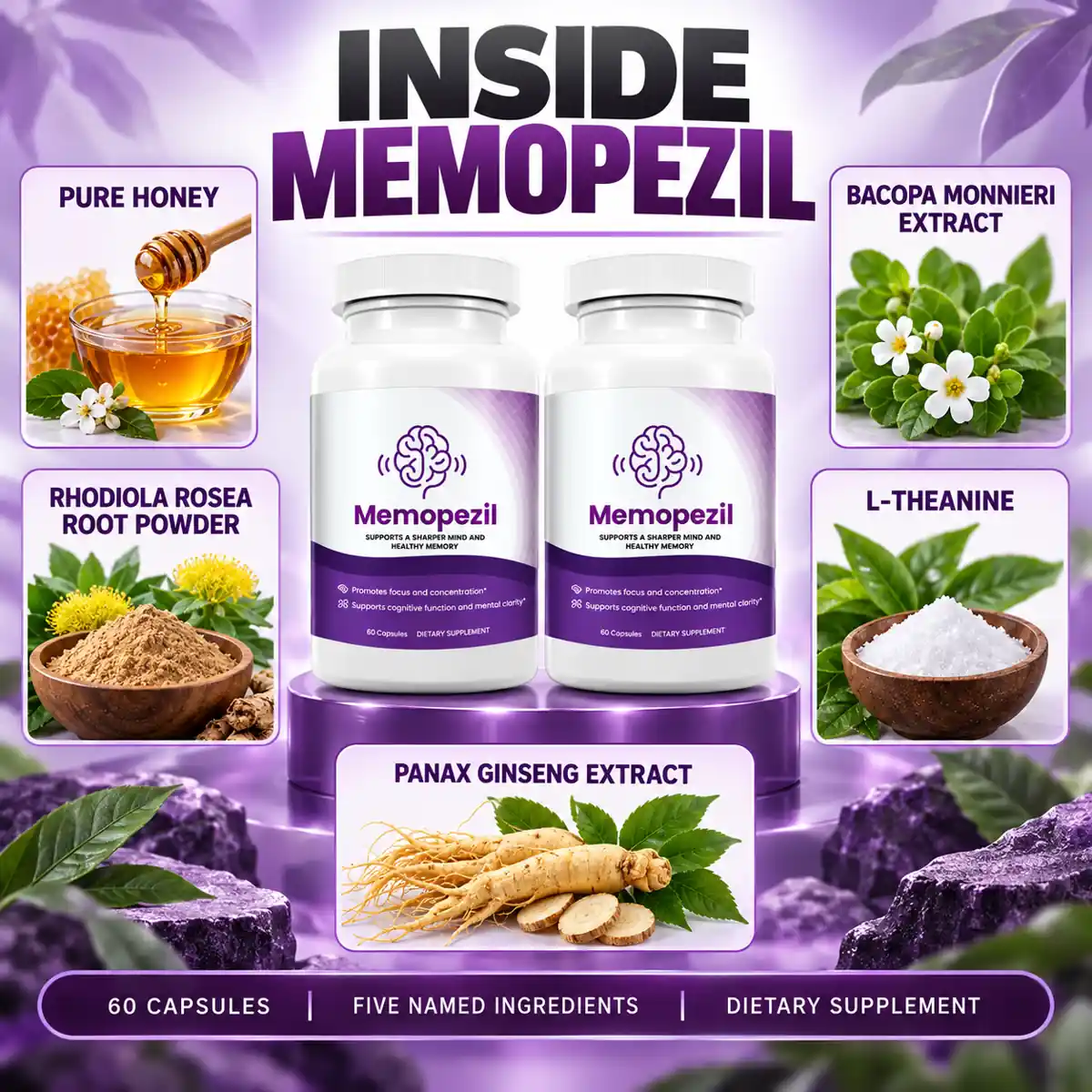
Two of the five actives are not botanical extracts and the standardisation question simply does not apply to them. L-theanine is a single amino acid, chemically identical whether it is isolated from tea leaves or produced by fermentation, so 100 mg of L-theanine is 100 mg of the same molecule regardless of source. The branched-chain amino acid blend is the same kind of ingredient at a larger scale: leucine, isoleucine and valine are each a defined molecule, combined here in a stated 2:1:1 ratio, and the arithmetic on that row is a different kind of question about amount rather than purity.
That leaves three rows — bacopa, rhodiola and ginseng — where the ingredient really is a variable botanical extract, and where a standardisation percentage would tell a reader something a plain milligram figure cannot.
Rhodiola: the one row that prints a number
The Supplement Facts panel lists “Rhodiola Rosea Extract (3% Salidroside),” which is the only standardisation percentage printed anywhere on this label. That is a real, useful piece of information: at 100 mg per serving, 3% works out to 3 mg of salidroside, an amount a reader can actually compare against a trial.
It is also an incomplete picture, for a reason a 2016 laboratory study of six commercial rhodiola products makes concrete. Rhodiola's other headline marker compounds — rosavin, rosarin and rosin — are not stated on this label at all, and the classic rhodiola clinical trials were run on an extract standardised to both salidroside and rosavins together, not salidroside alone. That same 2016 study also found something more basic worth knowing: one of the six commercial products it tested contained no rosavin, rosarin or rosin whatsoever, and its authors concluded it was not really a Rhodiola rosea product at all, despite the label. A printed percentage narrows the uncertainty on this row considerably. It does not close it.
Bacopa: no percentage, and a 7.5-fold spread in testing
The bacopa row on this panel carries no standardisation percentage. “Bacopa Monnieri Extract, 200 mg” states a weight, not a bacoside content, which means the reader has no way to know from the label alone how concentrated this particular extract is.
A 2024 study tested seven commercial Brahmi (bacopa) products bought on Thai online marketplaces for their actual bacoside content. One product, out of the seven, contained between 3.5 and 7.5 times more bacoside than the other six. That is not a small manufacturing variance; it is roughly the difference between a product doing very little and one doing what the label implies, sitting on the same shelf, both saying “bacopa extract” with no percentage attached.
This is exactly the situation an unlabelled percentage creates. Two 200 mg bacopa rows, both accurate about the weight printed, can differ several-fold in the compound the twelve-week memory trials were actually measuring. The article on those trials covers the dosing side of this row; this is the other half of the same picture.
Ginseng: no percentage, and a 3.4-fold spread in testing
Panax Ginseng Extract, like bacopa, is printed at a weight only — 90 mg per serving, no ginsenoside percentage. A 2004 study bought two lots each of nine ginseng products from different manufacturers and measured their actual ginsenoside content directly. Total ginsenosides ranged from 5.3 to 18.2 mg per serving across the nine brands — a spread of roughly 3.4-fold — while the amount recommended for daily use also differed between brands, which widens the real range of what two people taking “the recommended dose” of two different ginseng products actually consume. The same study found ginseng and echinacea were the most variable of the five botanicals it tested; St John's wort and saw palmetto were the most consistent.
The dedicated ginseng article on this website covers what the clinical trials found at specific doses of one named extract, G115. That analysis assumes the extract used in a trial and the extract in a given bottle are comparably concentrated. The 2004 testing above is a reminder that this assumption is not automatic across the category, and this label gives a reader no way to check it for this specific product.
All five rows, side by side
| Row | What kind of ingredient | Standardisation printed? | What published testing of the category found |
|---|---|---|---|
| Branched-chain amino acids | Isolated compounds, defined ratio | Not applicable | 540 mg is a fixed, checkable weight; see the dose arithmetic article |
| Bacopa monnieri extract | Botanical extract | No | 3.5–7.5-fold bacoside variation among seven commercial products |
| Rhodiola rosea extract | Botanical extract | Yes — 3% salidroside | Rosavins unstated; one of six tested products had none of rhodiola's other markers at all |
| L-theanine | Isolated compound | Not applicable | 100 mg is a fixed, checkable weight regardless of source |
| Panax ginseng extract | Botanical extract | No | 3.4-fold ginsenoside variation among nine commercial products |
Variation figures are read directly from the abstracts of the studies cited at the foot of this article, testing products from the wider commercial category rather than this specific bottle.
Read the whole panel, row by row, before deciding
Five actives, five printed weights, and one printed standardisation percentage. The ingredients page sets every row's dose against its own research.
Two bottles $158 · six bottles $294 · 60-day money-back guarantee
Order MemopezilTwo capsules a morning · 60 per bottle
Why this matters more than the milligram figure
A milligram figure is easy to compare and easy to market: 200 mg looks like more than 100 mg, on any shelf, in any country. A standardisation percentage is harder to print, because it requires the manufacturer to test the raw extract and report a real number that can be checked against a certificate of analysis, rather than simply weighing out powder. That is precisely why its absence is informative. A missing percentage is not proof of a weak product; both testing studies cited above found real variation between commercial products but did not test this specific brand, and this website holds a label reference rather than a certificate of analysis for this particular lot, a limit the supplement facts page states plainly for every row.
What the missing percentage does mean is that a reader comparing two bacopa or two ginseng products by milligram weight alone is comparing a number that the published testing above shows can move several-fold independent of that weight. The rhodiola row, by printing one number, gives a reader more to work with than the other two extract rows do — even though, as the section above shows, one number is still not the whole picture.
- 1 of 5 rows on this panel states a standardisation percentage.
- 2 of 5 rows are isolated compounds for which the question does not apply.
- 3.5–7.5× bacoside variation found among seven tested commercial bacopa products.
- 3.4× ginsenoside variation found among nine tested commercial ginseng products.
How a buyer could actually check
A printed percentage is not the only route to an answer, and it is worth naming the others before closing this article. Third-party certification programs — USP Verified, NSF Certified for Sport, and independent testing services such as ConsumerLab — exist specifically to test finished supplements against what their labels claim, including, for the programs that cover botanicals, the marker-compound content this article has been discussing. None of those marks appear on the Memopezil label as transcribed on the supplement facts page, which does not mean the product has failed such testing; it means, as far as this article's reading of the printed panel can establish, that it has not been submitted to one, or that the result is not stated on the pack.
A more direct route is simpler and slower: writing to a manufacturer and asking for the certificate of analysis behind a specific lot, which is the document that would state the actual bacoside, rosavin and ginsenoside content this article has been asking about all along. This website's testing and quality page goes into what that document can and cannot prove, and what an FDA-registered facility statement does and does not cover, which is a related but separate question from standardisation.
What a fair reading looks like
Printing weight without standardisation is common practice across this category, not a defect unique to this label; the article on what a supplement label is not required to state covers why the regulatory bar is this low across the board. Rhodiola's printed percentage is a genuine point in this panel's favour relative to its own bacopa and ginseng rows, even with the rosavin gap noted above. And the honest limit of this whole article is that none of the three testing studies cited tested this specific bottle — they tested the wider commercial category those ingredients come from, which is the most a reader from outside a laboratory can ever know without a certificate of analysis in hand.
Memopezil is a dietary supplement and not a medicine. Nothing on this page treats, prevents or slows any condition, and nothing above is a claim about this specific lot's actual bacoside, rosavin or ginsenoside content, which this website has not independently tested. The FDA's consumer guidance on dietary supplements covers how standardisation claims are and are not regulated in this category.
References
- Thu OK, Nilsen OG, Hellum B. In vitro inhibition of cytochrome P-450 activities and quantification of constituents in a selection of commercial Rhodiola rosea products. Pharm Biol. 2016;54(12):3249-3256. PMID 27572116. https://pubmed.ncbi.nlm.nih.gov/27572116/
- Nopparat J, Sujipuli K, Ratanasut K, Weerawatanakorn M, Prasarnpun S, Thongbai B, Laothaworn W, Inthima P. Exploring the excellence of commercial Brahmi products from Thai online markets: Unraveling phytochemical contents, antioxidant properties and DNA damage protection. Heliyon. 2024;10(2):e24509. PMID 38304802. https://pubmed.ncbi.nlm.nih.gov/38304802/
- Krochmal R, Hardy M, Bowerman S, Lu QY, Wang HJ, Elashoff R, Heber D. Phytochemical Assays of Commercial Botanical Dietary Supplements. Evid Based Complement Alternat Med. 2004;1(3):305-313. PMID 15841264. https://pubmed.ncbi.nlm.nih.gov/15841264/
- Questions and Answers on Dietary Supplements. U.S. Food and Drug Administration. https://www.fda.gov/food/information-consumers-using-dietary-supplements/questions-and-answers-dietary-supplements